The Ways In Which Suspension Telemetry Systems Removes Approximation within Alignment Optimization
In the high-stakes world of today's professional oversteer competition, victory is no longer purely a product of sheer engine power or driver courage. Instead, it has evolved into a complex discipline that necessitates a painstaking blend of choosing a time-tested vehicle platform, arming it with the most precise competition components, and, most essentially, understanding its live behavior on the circuit through advanced drift telemetry software. This comprehensive guide acts as your master plan from the initial concept of a project car through to the final engineering-refined adjustments that elevate a strong machine into a repeatable winner. We will thoroughly explore the art and science of chassis dynamics adjustment, demonstrating how a advanced vehicle dynamics tool like a dedicated telemetry system eradicates guesswork and delivers exceptional clarity into your chassis's real-world performance.
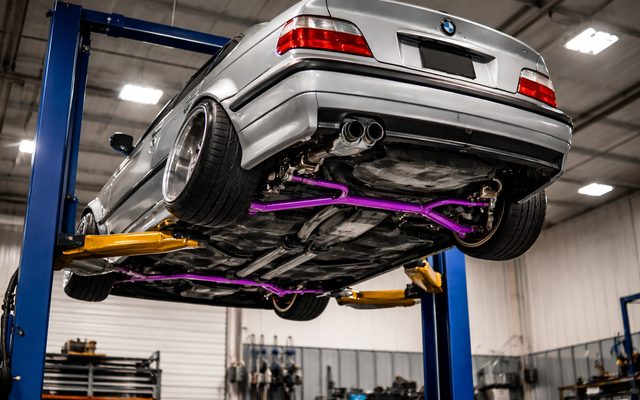
The cornerstone of any exceptional competitive sliding vehicle is, indisputably, the base vehicle itself. Certain platforms have earned iconic reputation within the worldwide sliding culture due to their built-in handling characteristics, robust construction, and the vast ecosystem of aftermarket support available. Picking the right platform is the first and most crucial decision a builder will make. For instance, the BMW E36 is widely regarded as one of the best all-around drift cars of the modern era. Its excellent evenly distributed mass, alongside a rear-wheel-drive setup and robust six-cylinder motors, forms a chassis that is simultaneously easy to handle for beginners and extremely effective in the hands of a pro driver. The successor of this philosophy, the E46 model BMW, improves on these qualities with a even more developed chassis, increased stance for greater confidence, and yet increased steering angle directly from the OEM. Another formidable option in the pro circuit is the Chevrolet Corvette C6.
This muscle-derived performance car introduces a particular set of strengths to the sliding world, featuring a lightweight alloy frame, a backwards-positioned gearbox and differential unit that contributes to an perfect balance, and the colossal low-end power of a large-displacement GM LS engine. This combination transforms it into an utter weapon on track, able of entering and maintaining continuous drifts with relatively effortless deployment of throttle. For drivers seeking outstanding value, the 350Z model Nissan stands out as a top-tier candidate. It comes from the manufacturer with a stiff body structure, a competent OEM limited-slip differential, and the free-revving V6 motor that offers plenty of horsepower and torque for learning and advancing in the discipline. Its successor, the 370Z model, presents more refinements in structural rigidity, handling precision, and outright motor performance, establishing its place as a favorite selection among professional pilots. Other legendary cars that deserve consideration include the agile unique Mazda FC RX-7, the ubiquitous S13 Silvia/240SX, the V8-powered Ford SN95, the modern BMW E90, and the tiny yet surprisingly engaging and forgiving Mazda MX-5. Each of these platforms provides a distinct array of characteristics, challenges, and potentials, but they all have in common the core ingredients necessary to become a capable sliding vehicle.
However, selecting the right car is just the beginning. To release the full capability of any of these cars, substantial upgrades to the steering system and chassis control systems are utterly non-negotiable. This is where the world of precision tuning hardware becomes critical importance. The most most transformative upgrade for a purpose-built competition vehicle is the integration of a maximum-angle angle modification kit. These engineered assemblies, for example those engineered by specialist companies like SLR Speed, are designed to significantly enhance the vehicle's possible lock-to-lock rotation. A factory street car is severely constrained in how far its tires can rotate, a design limitation for public road use. In oversteer driving, but, extreme countersteering is frequently necessary to catch and hold a drift. An angle kit replaces the factory hubs, tie rods, and potentially suspension arms with pieces that enable the steered wheels to reach angles over 70 or even 80 °, as opposed to a average factory angle of around 40 to 50 degrees.
This tremendously expanded steering angle gives the operator with dramatically enhanced command during a angle, making it far simpler to initiate a drift, sustain it through a extended corner, and switch smoothly from one direction to the other. The difference in handling is absolutely revolutionary. Combined with a properly specified steering kit is the every bit as essential enhancement to the chassis's suspension. Generic or including high-end sport coilovers are just not intended for the particular and brutal requirements of sliding. A drift-spec system of coilovers is crucial. These specific dampers have unique piston tuning and spring rates that are optimized for the violent load shifting that is inherent of sliding. When a pilot begins a angle, the chassis's inertia is thrown forcefully to the outside of the corner. Proper drift-spec coilovers manage this transfer in a predictable manner, allowing the chassis to settle quickly and giving the driver precise feedback through the wheel and seat. They additionally enable exact tuning of ground clearance, shock absorber rate, and cross-weight, which are all key elements of optimizing the vehicle's behavior to a particular circuit or piloting technique. As a system, a precision-engineered drift angle kit and a properly specified system of performance suspension units are the absolute physical foundation upon which all subsequent tuning is built.
Once the essential parts is fitted, the next critical phase in the project is the precise tuning of the chassis's wheel angles. This is the world of chassis dynamics adjustment, a procedure that can seem daunting to the uninitiated but is, in practice, the key to turning a set of high-performance pieces into a cohesive and predictable machine. The most critical parameter of suspension geometry for drifting is definitely negative camber. Wheel camber is the angle of the rim in relation to the vertical line when observed from the front of the car. When the upper part of the wheel is angled towards the chassis, this is referred to as camber-in. For drifting, inward-leaning wheels on the front tires is universally used and is seen as essential. The purpose is fundamentally tied to physics.
When a chassis is turning at extreme slip angles, the frame rolls towards the external of the turn. This chassis roll forces the outer front tire to reduce its best contact patch with the track surface. By adding inward lean, the tire is pre-angled to account for this tilt. As the car rolls into the turn, the outside front tire becomes more upright on the track, increasing its grip at the exact point when it is absolutely essential for control. Usually, front axle camber settings for a competition drift car range from approximately -3 degrees to as much as -5 degrees or even greater, based on the details of the vehicle geometry, compound type, and driver preference. The rear wheels also utilize negative camber, but the settings are generally more modest and less aggressive than the front axle. Overly aggressive camber at the back can result in the chassis extremely loose and hard to predict on acceleration input, as it shrinks the usable grip area of the driven tires during forward power delivery. Thus, rear camber settings are often in the range of -1 degree to -3 degrees, achieving a precise equilibrium between offering sufficient cornering grip to aid in entering and maintaining the slide while still preserving usable hook-up for acceleration the turn. Camber is merely one component of the broader alignment picture, which furthermore encompasses toe angle, caster, and suspension-induced steering modification.
Toe angle refers to the orientation of the wheels when viewed from a bird's-eye view. Inward toe means the front edges of the tires are closer together than the rear edges, while negative toe means the converse. For sliding, a small amount of front axle toe-out is commonly employed to sharpen the initial response handling response, making the vehicle feel more agile and ready to start a slide. Rear axle toe is generally set to zero or a incredibly slight amount of positive toe to encourage straight-line stability under power. Caster is the frontwards or rearward angle of the steering axis when observed from the side of the chassis. Positive caster angle increases feedback and high-speed confidence, and suspension engineering it furthermore boosts camber gain during turning, which is highly advantageous. Setting these parameters is a intricate interplay where a adjustment to a single setting can and will influence the others. The old-school process for dialing in a vehicle's suspension geometry for drifting has for a long time been a labor-intensive process of guesswork and adjustment. A tuner or team would apply a modification based on a hunch, drive the vehicle on track, use the operator's subjective feel and comments, and then make a further tweak. This cycle would iterate again and again until the car felt "right" or the scheduled track time was exhausted. This approach is not just exceptionally wasteful in terms of time and tires, fuel, and parts, but it is furthermore deeply imprecise.
Human feel is a notoriously inconsistent metric, colored by numerous variables such as tiredness, evolving track grip levels, weather, and merely the focus of the operator on that given run. What feels "tail-happy" on one pass might feel "pushing" on the subsequent run, resulting in conflicting information and ineffective changes. This long-standing challenge in vehicle dynamics optimization is exactly where modern technology has made its mark to transform the landscape.
The rise and adoption of sophisticated vehicle dynamics tools has ushered in a new paradigm for tuning and refining high-performance drift cars. This new generation of platforms, represented by innovative products like data acquisition tools, operate by physically measuring the actual mechanical movement of the vehicle as it is piloted on the circuit. Unlike using driver impression, these tools acquire quantifiable data on essential variables such as suspension travel, corner velocities, acceleration forces, steering angle, and throttle and brake position. This raw telemetry is then processed by sophisticated algorithms that can plot and analyze the information in a comprehensible manner. For the very first time, tuners and crews can see precisely what the car is performing at each moment of a lap. This capability revolutionizes the entire chassis setup procedure. Consider the aforementioned challenge of setting the front axle negative camber for a given car. Instead of applying a modification from -3 degrees to -3.5 degrees and then testing many laps to try and "sense" a improvement, a suspension tuning tool can deliver drift tuning app immediate and definitive data. The application can display visually how the tire's loading is acting during the key stages of a angle: initiation, sustain, and changing direction. It can reveal if the present angle is permitting the steering tire to achieve optimal grip or if the tire is overloaded on its outside edge. drift telemetry software
The tool can after analysis provide data-driven advice for adjustment. Perhaps the data indicates that the outside front tire is even overworking its sidewall at -3.5 degrees of camber, suggesting that even more angle, say -4 degrees, might be warranted. Alternatively, the information might show that the tire is not coming up to temperature or that the inner edge is degrading unevenly, which could suggest that there is too much negative camber and a modest lessening back to -3.2 degrees would be better optimal. This level of precision and actionable insight was literally unimaginable in the days of solely manual setup.
The effect of employing a dedicated suspension tuning tool goes far beyond just setting camber. It becomes an priceless damper adjustment manual that is specific to your particular vehicle. When fine-tuning the damping settings on your adjustable dampers, rather than depending on general guidelines or mimicking another car's settings, you can utilize the telemetry to observe how the vehicle is reacting in relation to your changes. The application can show the wheel movement trace over a lap, revealing if the dampers are managing the body movement effectively or if they are causing the car to bounce excessively after a flick. It can assist in diagnosing issues like hitting the bump stops or topping out, allowing you to make informed choices to spring preload, rebound/compression values, or ground clearance. This process extends just as well to the complex task of car alignment tuning. Beyond camber, the tool can provide data into how modifications to toe settings and caster are impacting the car's stability during various maneuvers of a lap. For example, it can assist you to determine the ideal amount of front toe out for your specific steering geometry and driving technique by measuring the quickness of initial response and the predictability of the vehicle at full countersteer. This makes the tool an exceptionally effective vehicle dynamics manual that is actively calibrated by the real-world performance of your personal car on the circuit. It elevates the whole process from a dark art into a methodical optimization exercise.
Moreover, the application of a tool like modern telemetry is in no way limited to professional teams with extensive funding. For the grassroots enthusiast, it functions as an powerful force multiplier. It in essence gives the driver with the insight of a professional race engineer without requiring the typical expense. It drastically shortens the tuning process by providing definitive answers to challenges that would traditionally take seasons of trial and error to answer. A builder can learn how their specific vehicle responds to various settings, gaining a more profound understanding of car control in the process. It additionally opens up high-level performance tuning concepts, allowing anyone with the desire to refine their car to do so in a systematic and productive way. This is especially valuable in a discipline like oversteer competition, where setup knowledge has historically been a closely guarded advantage among professional teams. Today, that power can be in the hands of every motivated builder.
In summary, the path to building and tuning the ideal high-performance sliding vehicle is a comprehensive endeavor that perfectly integrates time-honored hardware wisdom with revolutionary telemetry tools. It starts with the informed selection of a proven car, then built upon the integration of critical drift-spec components like drift-spec drift angle kits and properly valved performance coilovers. The journey then progresses into the precision realm of chassis dynamics adjustment, where parameters like negative camber, toe setting, and caster are carefully configured to suit the chassis's new hardware and the driver's individual style. Ultimately, and what really distinguishes the today's methodology from the traditional methods, is the integration of a advanced drift telemetry software. This system eradicates the uncertainty and trial and error of purely seat-of-the-pants tuning by giving objective, actual telemetry on how the vehicle is really behaving. It functions as an unparalleled engineering partner, a definitive alignment optimization handbook, and a master vehicle dynamics tool. As a complete package, this holistic approach ensures that each and every component of the drift car—from the selection of the platform to the most minute adjustment on the suspension—is refined for ultimate performance on the track. It signifies the complete progression of the sport of sliding, merging mechanical driving skill with precise chassis dynamics to create the ultimate dominant machines imaginable.